
Dr Deepak Kumar Nanda
The current issue of electoral bonds gained momentum after the Supreme Court Judgement declared the Electoral Bonds Scheme unconstitutional and ordered the State Bank of India to hand over all the details to the Election Commission of India. Finally, it came to the public domain after the ECI published it on its website. However, in between, many dramas were unfolding in the Supreme Court, like the SBI seeking more time to furnish the same. Even after providing the data to the ECI, it did not provide everything in one go, and the Supreme Court had to intervene.
It was a scheme brought by the BJP-led government in 2016, and as usual, when something goes wrong, the party in power attract criticism; they also receive public scrutiny and criticism from the opposition parties. Opposition and media alleged that the ruling BJP used central agencies like ED, CBI, and the Income Tax Department to extort funds from various corporate bodies. This argument is based on the coincidence that some of the companies got ED raid, and then they donated money and received some relief. The other allegation is that some of the parties were given work contracts after receiving the funds through electoral bonds. That is also true in some cases when they gain big contracts.
The fact is that the ruling party got more funding through electoral bonds, and the BJP, who brought the scheme, got the lion’s share of the funding with 47 per cent (6660.50 crores) of the total funding between 12 April 2019 and 24 January 2024. The distant second was TMC with 12.6 per cent (1609.50 crores), followed by the Indian National Congress receiving 11.11 per cent (1421.9 crores). Besides, the majority and higher donors are the corporate and business houses. This reveals the ruling class and corporate nexus through political donations.
Ruling Class and Corporate Nexus
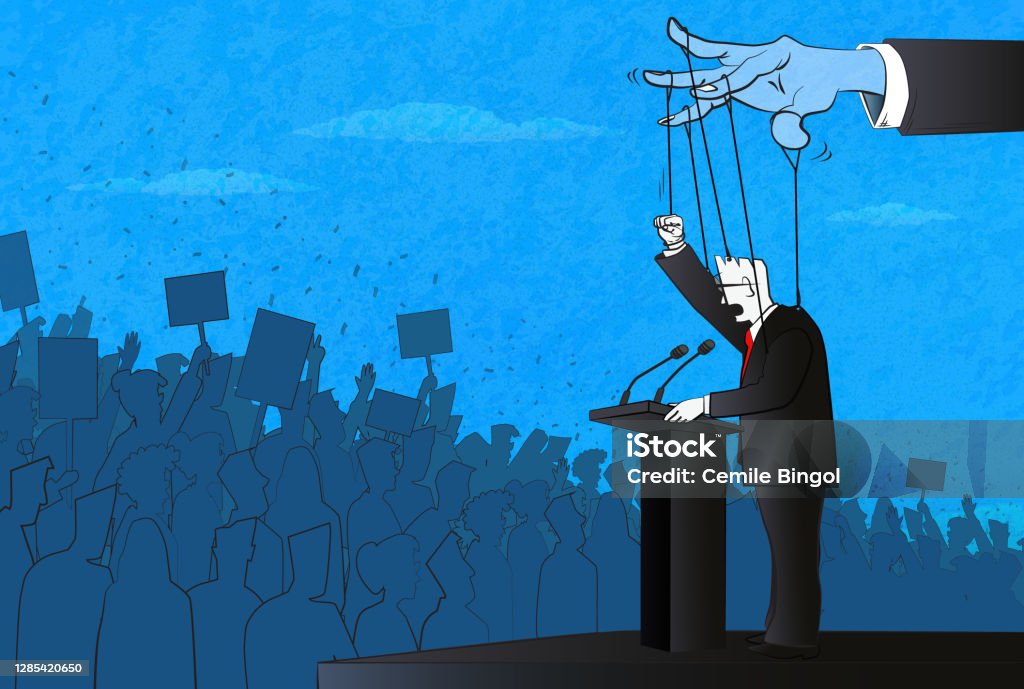
The electoral bonds scheme revealed the increasing donations from corporate and business houses and the missing public donations. That further solidified the ruling class and corporate nexus in electoral politics in India. Explaining the domination in politics, Chatterjee (2010)[1], argues that there is no clear-cut domination by one particular group in Indian politics, but they forge a coalition to do so. He says that various groups like capitalists, landlords, and urban middle classes selectively use various institutions in Indian democracy. It means the political parties forge a coalition with the capitalist and business houses for politics.
However, there is no issue in forming a coalition and running the government. The concern is the quid pro quo and taking a commission from the public projects. It also makes the government serve the interest of donors more in policy-making than the common citizen. It also hampers the free functioning of corporate and business sectors as the political parties may compel donations when there is no limit on donations. This also leads to an increasing role of money in electoral politics, which has become a costly affair. As a result, common citizen cannot participate in electoral politics except for their voting rights. Here, in this case, the biggest losers are the citizens and the democratic institution hampering the deepening of democracy.
Political Parties’ Corporate Interests Over Citizen
Political parties have no choice but to have two means to attract donors and citizens at a time. The parties will impress donors to get money and citizens to get votes. Political decisions, programmes and public policies may appear to target citizens, but they also have hidden interests in serving the donors. It has been seen in the past that public institutions and sectors are handed over to corporate houses in lease and maintenance. Besides, some of the public-driven policies are amended favouring the corporate bodies. For instance, the defence contracts were given to the Adani group (a private conglomerate) instead of public sector units like the Hindustan Aeronautics Limited (HAL) and Bharat Heavey Electric Limited (BHEL). The amendments in the Forest Rights Act 2006 and the Land Acquisition, Resettlement and Rehabilitation Act 2013 also favour corporate interest over tribes and other forest-dwelling communities. There was also an allegation of serving the corporate interests more in the three farmers’ bills in 2020 which was withdrawn later after the strong farmers’ protest. In these cases, it cannot be solely believed that the political parties are helping the citizens prosper and strengthen democracy. Unanimous and large donations from corporate and business sectors compel political parties to mislead citizens and serve the interests of donors more than the citizens. When the bulk of the funding comes from a few corporate houses, businessmen, or contractors, the dependency of a political party is more on the corporate elite than the people. People are treated merely as vote banks and their basic needs are overlooked.
Conclusion
The electoral bonds once again exposed the ruling class and corporate nexus, which is, in a way, a hindrance to deepening democracy. It also shows the vulnerability of political parties before the corporate houses for their survival. It is also clear from the recent revelation that corporate houses have more say and control over political parties as well as public policy behind the back doors. As a result, the political parties have dual approaches, often misleading the citizens. Therefore, a measure for a vibrant democracy is to limit the donations for corporate and business houses to check the monopoly of corporate houses in politics and public affairs as well as the smooth functioning of corporate and business sectors without the much interference of political parties. The donation should also be revealed to the public so that political parties cannot pressure anyone through the state machinery. There should also be a limitation on receiving donations for political parties, where 50 per cent of the donations may come from corporate and business houses, and the remaining percentage should be collected through crowdfunding by citizens and their followers.
About the Author
Dr Deepak Kumar Nanda is the Founding Editor of DDInsights.
[1] Chatterjee, P. (2010). The State. In N. G. Jayal, & P. B. Mehta (Eds.), The Oxford Companion to Politics in India (pp. 3-14). New Delhi: Oxford University Press.
About The Author




Leave a Reply