
Manuvadi and Feudal Creeps’ Intergenerational Modus Operandi
The contemporary attacks on Dalit and Adivasi Christians by urban Manuvadi and feudal elements reflect an older strategy of social and religious dominance, in which political and feudal power sought to appropriate people, deities, religious places, and cultural practices of Dalits and Adivasis
A handful of urban Manuvadi casteists and feudal creeps have been running a vicious online campaign targeting Dalit and Adivasi Christians and other minorities. Such campaigns are not new; rather, they reflect an intergenerational strategy of social and religious dominance. Last year, following the untimely demise of the great Odia playback singer, the late Humane Sagar, these urban Manuvadi and feudal elements did not even hesitate to mock his religious faith and beliefs online.
The mockery of the late Humane Sagar was not merely an insult to an individual; it was also an affront to the spirit of the Indian Constitution, which allows every citizen to follow the religion of their choice. Article 25 of the Constitution guarantees freedom of conscience and the right to profess, practice, and propagate religion. Such attacks are also deeply connected with the social position of Dalits in Odisha, who constitute around 22 percent of the state’s population and whom such castiest forces perhaps continue to wish to see as untouchable and subordinate.
These individuals are neither journalists, scholars, nor intellectuals, as is evident from their intellectual poverty and misinformation about religious conversion in Odisha. Their primary motive appears to be the continuation of social dominance by spreading hatred and promoting enmity between communities through false and casteist narratives. Their arguments often do not deserve a response because of their illogical reasoning and distorted presentation of facts. Yet, as the saying goes, “the stupid are always cocksure while the intelligent are full of doubt.” Urban Manuvadi and feudal creeps are similarly cocksure about their illogical arguments, distorted facts, intellectual poverty, and prejudice, thereby damaging the quality of public intellectual discourse.
The debate around religious conversion is also highly partisan in public discourse. Different groups often interpret the history of religious change according to their contemporary political and ideological positions. In this context, this article attempts to examine the history of religious conversion and religious transformation in Odisha and distinguish between myth and reality.
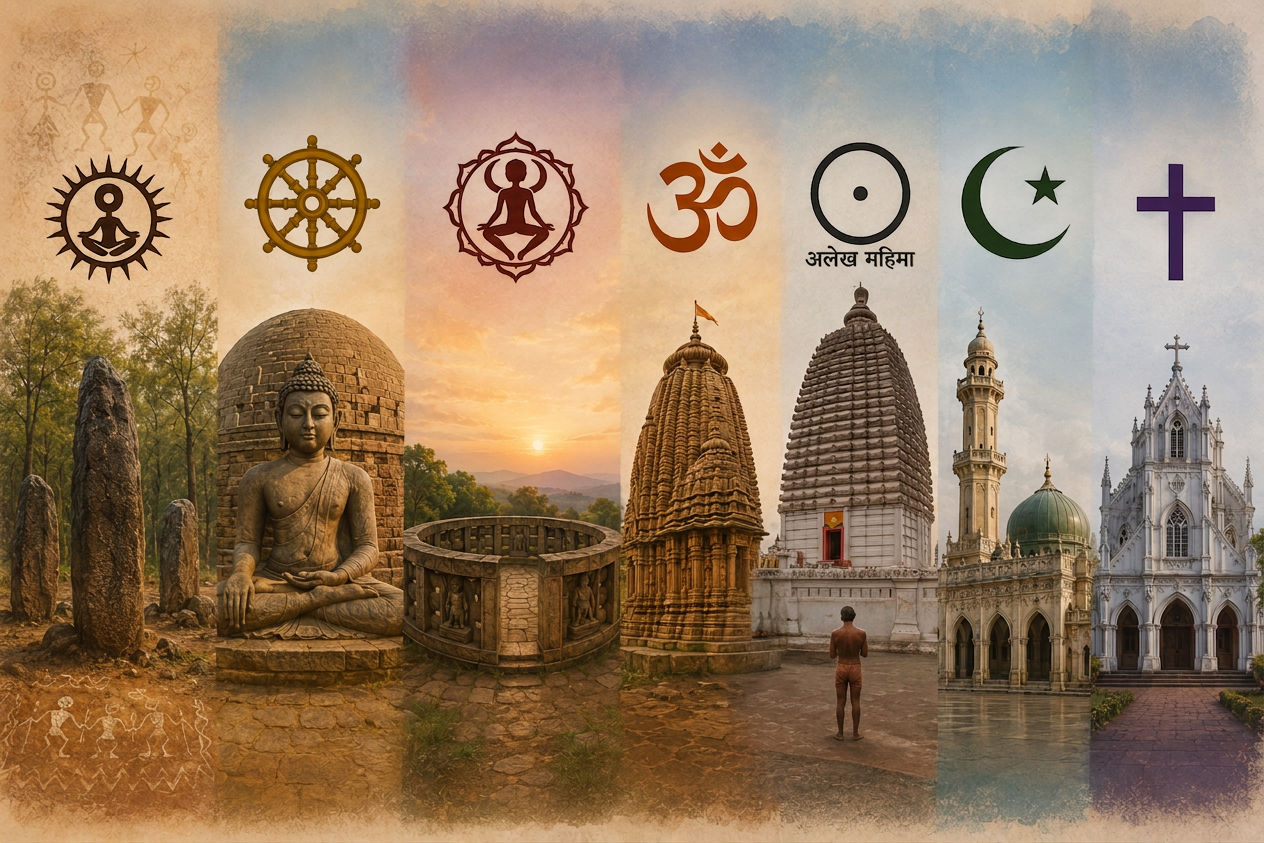
Samrat Ashoka to Bhaumakara Dynasty from 300 BCE to 900 CE Odisha: Land of Buddhism
The religious history of Odisha—known historically by various names such as Kalinga, Udra, and Utkala—is clearly documented from the time of Samrat Ashoka in the 3rd century BCE. The Battle of Kalinga at Dhauli remains one of the most important events in the socio-political and religious history of Odisha. It is well known that Samrat Ashoka expanded his kingdom across a vast territory and subsequently promoted Buddhism within and beyond India. He sent his son Mahendra and daughter Sanghamitra to present-day Sri Lanka to preach Buddhism.

Odisha subsequently emerged as one of the important centres of Buddhism, and Buddhist traditions continued to flourish in the region for centuries. The archaeological remains at Dhauli, Tarapur Garh, Jaugada, Ratnagiri, Udayagiri, and Lalitgiri continue to bear witness to Odisha’s rich Buddhist past.
Buddhism flourished after the reign of Ashoka, although Jainism also gained momentum for a period around the 4th century CE. During the time of King Harshavardhan, the Chinese traveller Hiuen Tsang visited Kalinga and witnessed Pushpagiri University, which was regarded as a major centre of knowledge comparable in stature to Nalanda and Vikramashila. Later, the Bhaumakara dynasty took Buddhism to another level by establishing numerous viharas, stupas, and monasteries across Odisha.mportant Buddhist sites included the Mahavihara at Ratnagiri, Udayagiri, and Lalitgiri; the vihara at Ranipur Jharial in western Odisha; and Buddhist establishments at Hirapur, Puri, and Konark in eastern Odisha. Caves at Khandagiri also form part of this wider religious landscape. There were traditions associated with Buddhist relics in present-day Puri. Similarly, Tarapur Garh in Binika and Asurgarh in Kalahandi were associated with important civilisations and Buddhist monasteries. Ganiapali Buddha Vihara near Gaisilet in Bargarh district and Parimalgiri Maha Vihara at Gandhamardhan Hill near Harisahankar and Nrusinghanath in present-day Bargarh and Balangir districts further demonstrate the spread of Buddhism into western Odisha.
Vajrayana Buddhism, that includes the worship of matrikas or goddesses in the form of statues, evolved during the Bhaumakara period. The Sapta Matrika of Jajpur, Goddess Tara Devi of Ratnagiri, and the Chausathi Yogini shrine are important witnesses to this tradition. It was also during this period that the philosophy of Sunyabada associated with Nagarjuna evolved in this region. Elements of this tradition continue to be visible in central Odisha through the Alekh Mahima sect.

Several other prominent gods and goddesses associated with popular traditions of the period included Dwarseni, Budharaja, Manikeswari, Gangei, Samleswari, and Budhi Thakurani. Many of these deities continue to be worshipped today. Dwarseni, for instance, is widely worshipped among Dalit and Adivasi communities in Balangir and Kalahandi districts. Its presence can also be found in the Ratanagiri area of Jajpur, Mayurbhanj, and parts of Purulia in West Bengal. Budhi Thakurani and Gangei are worshipped in many villages across western and coastal Odisha. Budharaja is widely worshipped throughout western Odisha. Tara Devi is worshipped under different names, including Ugra Tara, Ugra Chadi, and Mangala.
Vajrayana Buddhism and the religious beliefs and practices of Dalit and Adivasi communities also evolved alongside and in interaction with one another. The geographical location of viharas, monasteries, and stupas provides an indication of this relationship. At the heart of the historical civilisation of Bhubaneswar, the old town contains Sabara Sahi and Buddha Nagar, whose proximity to the Buddhist landscape also indicates the historical relationship among tribal communities, Dalits, and Vajrayana Buddhism.
Kesari to Ganga Dynasty from 900 CE to 1500 CE Odisha: Immigration of 10,000 Brahmins, Religious Appropriation, and Conversion
The rise of the Keshari rulers of the Somavansi dynasty, who came from central India, contributed to the decline of the Bhaumakara dynasty and the weakening of Buddhism in Odisha. Brahminism was strengthened through the settlement of 10,000 Brahmins brought from the Kanauj region of present-day Uttar Pradesh. A yajna was organised near the Saptamatruka temple constructed by the Bhaumakara queens on the bank of the Baitarani River, at what is presently known as Aswamedha Ghat in Jajpur town.

Over time, Buddhist viharas, religious sites, symbols, and deities were incorporated into Brahminic temples and religious traditions. This process can be observed in several temples and religious sites in Jajpur district, as well as at the Chausathi Yogini temples of Hirapur and Ranipur Jharial.
Inside the Chausathi Yogini complex at Ranipur Jharial, for instance, there is a Someshwar temple. This structure may not represent an entirely new construction but could indicate the transformation of an earlier Buddhist structure into a Someshwar temple. Similarly, the Parimalgiri Maha Vihara at Gandhamardhan Hill was transformed into a Brahminic religious site.
The symbol of a roaring lion standing over a kneeling elephant at the entrance of the Sun Temple at Konark has also been interpreted as a symbol of victory over Buddhism—the powerful lion representing the triumph of the new religious order over the earlier Buddhist tradition. The imagery may therefore be understood within the broader history of religious transformation in Odisha. Similar religious structures and sites were subsequently established over or around earlier Buddhist viharas and monasteries in present-day Puri, Konark, and Bhubaneswar, where Buddhism had once flourished.
Many temple structures in present-day Bhubaneswar may also contain traces of earlier Buddhist contributions. In some places, older religious structures appear to have been destroyed or incorporated into later Brahminic structures. Archaeological excavations near the Lingaraj Temple at Bhubaneswar have revealed evidence of an earlier structure beneath the present temple complex, raising important questions about the religious transformation of the region.
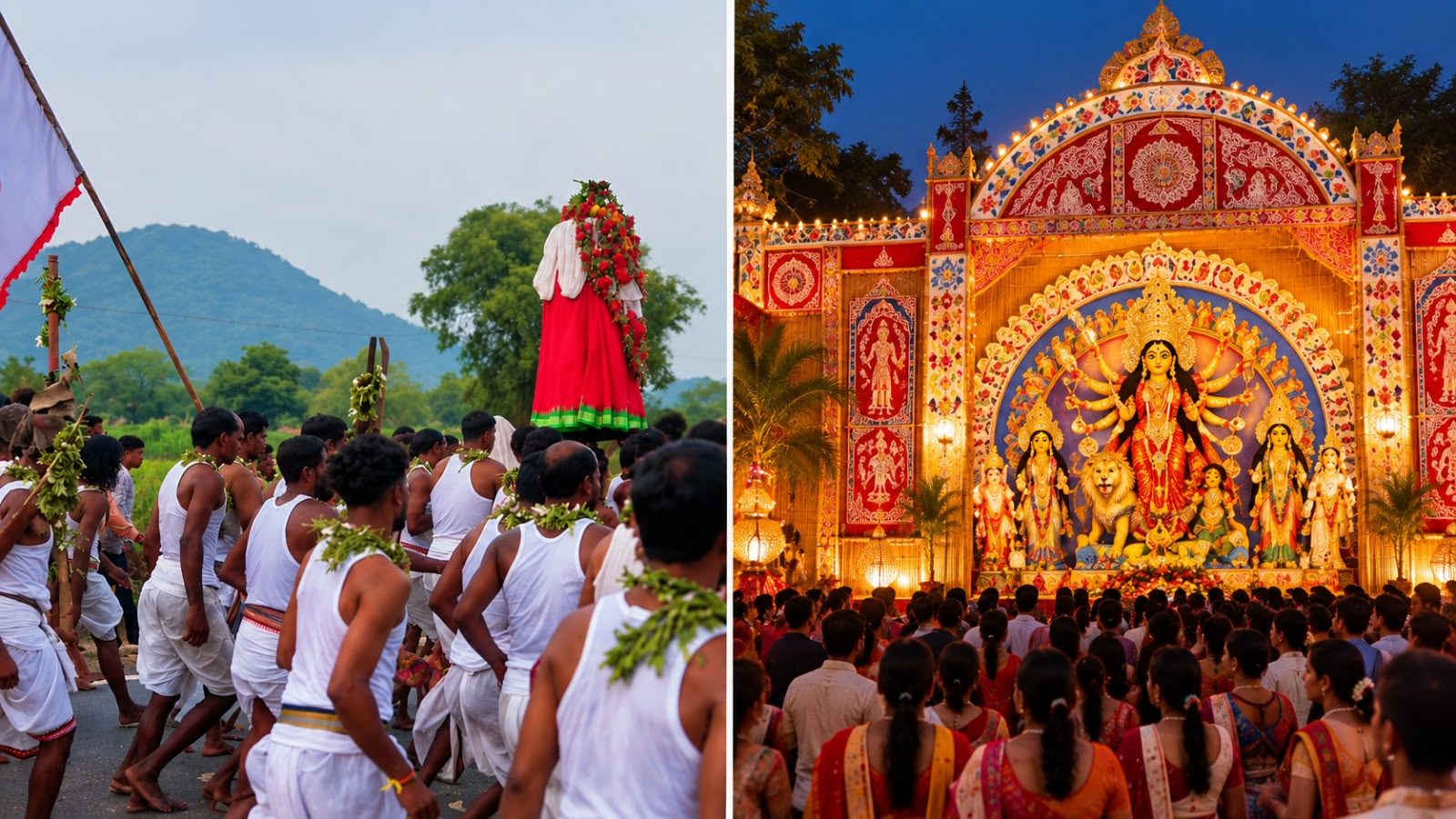
It was also during this period that Sankaracharya visited Puri and preached Vedanta philosophy. Similarly, feudal rulers in western Odisha were able to incorporate several local worship traditions into Brahminic religious practices. Goddesses and deities such as Manikeshwari, Dwarseni, Gangei, and Budharaja were gradually incorporated into dominant religious traditions. Social and religious celebrations such as Nuakhai also experienced processes of cultural and religious assimilation.
Later, the Keshari dynasty declined with the arrival of the Ganga dynasty from southern India. The Gangas did not necessarily introduce an entirely new religious system. Instead, through modifications to existing cultural and religious practices, they took over the political and religious role of the Keshari rulers and further consolidated the foundations of Brahminism.
This process also influenced the development of the Lord Jagannath cult at Puri. The Ganga dynasty played an important role in its institutional development, which continues to shape Odisha’s religious identity today. However, Gangeshwari was the presiding deity of the Ganga dynasty rulers, and the Gangas were not originally worshippers of Lord Jagannath in their southern homeland.
Mughal and British Rule from 1600 to 1800 CE: Introduction of Islam and Christianity
Towards the end of the 16th century, the Mughals took control of eastern Odisha after defeating the Ganga rulers. This brought an end to Ganga political dominance in the eastern region and contributed to the introduction and expansion of Islam in Odisha. Some sections of the population embraced Islam, particularly in the eastern parts of present-day Jajpur, Bhadrak, and Cuttack districts.
Similarly, in the early 19th century, the British established direct rule over eastern Odisha, and eventually the wider territory of present-day Odisha came under British rule. Western and northern parts of Odisha continued to remain under different forms of feudal rule, often through arrangements involving the British and local feudal rulers.
During this period, various missionary groups began humanitarian and missionary activities, particularly in the areas of education, healthcare, and other social services. Alongside these activities, missionaries preached Christianity. Some people, particularly Dalits and Adivasis, embraced Christianity.
For sections of these communities, Christianity offered an alternative to the social and religious structures associated with Brahminical dominance. Some rejected what they perceived as the imposition of Brahminism under the Keshari rulers and sought an alternative to the religious traditions that had replaced or marginalised earlier Buddhist and animist practices.
However, it is important to note that the first person to embrace Christianity in Odisha was also a Brahmin. Therefore, the contemporary claim that Christianity in Odisha was simply a religion imposed upon Dalits and Adivasis does not adequately capture the complexity of its historical spread.
Brahminical Strategy of Religious Appropriation and Conversion
Throughout Odisha’s history, successive rulers and political powers reshaped its religious and cultural landscape. In this process, feudal structures persisted in parts of the region, and Brahminism emerged as the dominant religious order, strengthened by the settlement of immigrant Brahmins. The rise of Brahminism involved the appropriation and transformation of Buddhist sites, symbols, practices, and deities. Islam and Christianity remained minority traditions. Throughout these changes, Dalit and Adivasi communities remained a constant presence, from the time of Ashoka to the present. Their social and religious status, however, changed significantly. They experienced greater status during the Buddhist period but faced decline under Brahminic rulers and the Ganga dynasty. Vajrayana Buddhism also developed in close interaction with these communities, whose religious sites and knowledge centres were subsequently destroyed, transformed, or co-opted.
For many Dalits and Adivasis, successive religious transformations therefore represented the displacement or modification of ancestral traditions. Yet Odisha’s history cannot be reduced to attributing religious conversion to any single faith. Religious change has involved political power, cultural interaction, assimilation, co-optation, resistance, and individual choice.
The contemporary attacks on Dalit and Adivasi Christians by urban Manuvadi and feudal elements reflect an older strategy of social and religious dominance, in which political and feudal powers sought to appropriate people, deities, religious places, and cultural practices. But the context has changed in the era of Ambedkar, democracy, the Republic, and constitutional rights.
Today, every individual has the constitutional right to practise and propagate their chosen faith. Dalit and Adivasi communities are also reclaiming ancestral beliefs, practices, and cultural spaces associated with Buddhism, viharas, and indigenous deities. Such reclamation may represent not merely conversion but a search for dignity, identity, cultural memory, and freedom from historical domination.
Therefore, the debate on religious conversion in Odisha must be located within its long and complex history of religious transformation. The real challenge is not individual religious choice but caste hierarchy, social exclusion, historical distortion, and the use of religion to sustain social dominance. A meaningful debate must move beyond communal narratives and engage honestly with Odisha’s intertwined history of religion, caste, culture, power, and resistance.
Further Readings
Mahatab, H. (1983). Odisha Itihasa (IV ed., Vol. I). Cuttack: Cuttack Students’ Store.
O’Malley, L. (1929). Bihar and Orissa District Gazetteers: Puri. Patna: Superintendent, Government Printing, Bihar and Orissa.
Tripathy, G. C., & Kulke, H. (Eds.). (1994). Religion and Society in Eastern India: Eschmann Memorial Lectures. Bhubaneswar: The Eschmann Memorial Fund, Utkal University, Orissa.
About The Author




Leave a Reply