
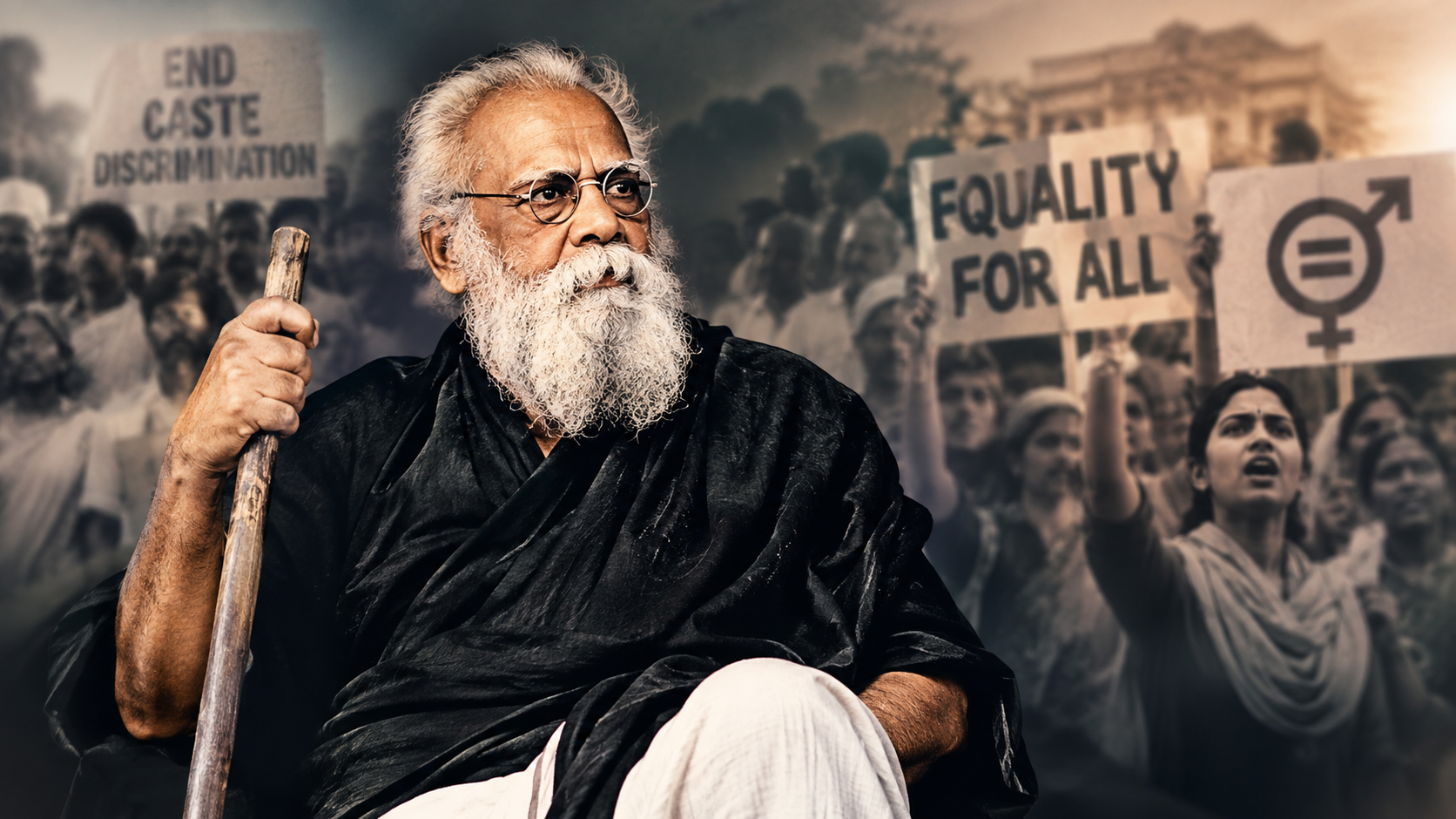
Periyar’s life, movement and philosophy have a relevance today. His central idea of the demand for dignity and self-respect should not be left at the mercy of the perpetrator but should be asserted by the depressed and practical communities by questioning the inherited social and religious hierarchy is powerful and practical.
17th September 2026 was the 147th birth anniversary of the great leader and social reformer E. V. Ramasamy, popularly known as Periyar. He was a most influential social reformer of twentieth-century India and known for the “Self-Respect Movement”. He was born in 1879 in Erode, Tamil Nadu and died in 1973. During his lifetime, he dedicated much of his public life for the activities to bring reforms in caste society and religious orthodoxy by promoting social equality and empowerment of women. His life and philosophy were so significant that even after his death, he is more relevant and guiding principle of socio-political and religious life. All the prominent political parties in Tamil Nadu see him as their political inspiration and ideological mentor be it the DMK, AIADMK or TVK. Most importantly, he instilled faith and showed the backward classes the direction to take control of their self-respect and rule in their own hands. However, despite his enormous contributions and dedication towards an equal society, his legacy has little awareness in northern India. It is a tribute to his legendary contributions for social and gender equality through this write up.
In 1925, Periyar launched the Self-Respect Movement, which fundamentally challenged the caste hierarchy and Brahminical dominance in the social and religious life of Tamil Nadu. Before that, his participation in the Vaikom Satyagraha in Travancore in the 1920s, against caste-based restrictions on access to public roads around the Vaikom temple, was a steppingstone to the Self-Respect Movement. It aimed to promote dignity and equality among the historically subjugated and marginalised communities. The movement also advocated women’s education, greater equality within marriage and changes to patriarchal social practices.
Rationalism was central to the self-respect movement. Pariyar strongly believed that a belief should not be merely accepted because it is traditionally inherited; rather, it must be rationally questioned. That is the very foundation of social transformation. He propagated these ideas strongly through speeches, newspapers and journals—including Kudi Arasu and later Viduthalai against the general belief in caste hierarchy. Kudi Arasu means Republic in English; it was a weekly magazine founded and edited by Periyar himself. Similarly, Viduthalai, meaning Freedom in English, was a prominent Tamil daily newspaper founded under Periyar’s leadership and continues to publish even today.

He also emphasised mother tongue, local language and political power. Therefore, strongly opposed the imposition of the Hindi language in the Madras Presidency. He knew that language is the medium of cultural hegemony and control; therefore, he advocated for Tamil language pride through a movement for linguistic autonomy and social power. In 1944, the Justice Party was transformed into the Dravidar Kazhagam (DK) under his leadership, which continues to work for rationalism, anti-caste and social justice as an ideological and non-political group.
His uncompromising stand on religious institutions, caste hierarchy and Brahminical traditions made him deeply influential among the backward and marginalised communities. This subsequently shaped the intellectual and political foundations of the Dravidian movement in Tamil Nadu, influencing pubic debates on caste, language, gender and social justice.
More than five decades after his death, Periyar remains relevant to public discourses on the control of social institutions, caste-based inequality, political democracy and social equality. His message was straight and clear: the demand for dignity and self-respect should not be left at the mercy of the perpetrator but should be asserted by the depressed and marginalised communities by questioning the inherited social and religious hierarchy.
Periyar’s contribution, therefore, does not lie only in the hands of his followers or confined to a geography. The culture of questioning authority, tradition, social dominance and the unequal social order needs to be the cultivation of minds and practices across society and geography in India.
About The Author



Leave a Reply